From Emissions to Equity: Implementing Robust Carbon Offset Solutions

operations manager carbon credits

phoenixr77 An field emissions specialist in a white safety he 65105207 ecb5 4cc6 a100 8b0c762935ce 1 - From Emissions to Equity: Implementing Robust Carbon Offset Solutions

In the contemporary business landscape, carbon offset management has become a pivotal strategy for organizations striving to achieve sustainability and adhere to evolving regulatory standards. This comprehensive approach involves not only compensating for greenhouse gas emissions through investments in environmental projects but also integrating advanced technologies and strategic planning to effectively reduce an organization’s carbon footprint.

Understanding Carbon Offset Management

Carbon offset management encompasses a series of actions aimed at balancing emitted greenhouse gases by funding initiatives that either prevent the release of emissions or actively remove them from the atmosphere. These initiatives range from reforestation and renewable energy projects to advanced carbon capture and storage technologies. By participating in such programs, companies can neutralize their environmental impact, thereby contributing to global efforts against climate change and enhancing their corporate social responsibility profiles.

Strategic Implementation of Carbon Offset Initiatives

A successful carbon offset strategy is multifaceted, involving several critical steps:​

  1. Comprehensive Emissions Assessment
    The foundation of any offset program is a detailed understanding of the organization’s current emissions. This involves rigorous data collection and analysis to quantify emissions across all operations, identifying key areas where reductions are feasible. Accurate measurement is essential for setting realistic reduction targets and determining the volume of offsets required.

  2. Integration into Business Operations
    Carbon trading should not be viewed as a standalone effort but rather as an integral component of the organization’s overall sustainability strategy. This integration ensures that offsetting efforts align with broader business objectives, facilitating cohesive and effective environmental stewardship. Engaging stakeholders at all levels fosters a culture of sustainability and promotes collective responsibility.

  3. Selection of Verified Offset Projects
    Investing in credible and certified offset projects is paramount. Organizations must conduct due diligence to ensure that selected projects adhere to recognized standards and deliver measurable environmental benefits. This not only guarantees the legitimacy of the offsets but also enhances the organization’s reputation among consumers and regulators.

  4. Transparent Reporting and Communication
    Maintaining transparency in offset activities builds trust with stakeholders and the public. Regular reporting on emissions, offset investments, and the tangible impacts of these actions demonstrates accountability and reinforces the organization’s commitment to sustainability.

Leveraging Technological Advancements

The role of technology in carbon offset management cannot be overstated. Innovations in this field have revolutionized how organizations approach emissions reduction and offsetting:​

  • Carbon Management Software
    Modern platforms offer sophisticated tools for tracking emissions in real-time, analyzing data, and generating actionable insights. These systems facilitate accurate accounting and streamline the process of identifying reduction opportunities, making the path to net-zero more attainable.​

  • Blockchain Technology
    The adoption of blockchain enhances the transparency and security of carbon credit transactions. By providing an immutable ledger, blockchain ensures the integrity of credits, reduces the risk of fraud, and fosters greater confidence in the carbon markets.​

phoenixr77 A professional field emissions specialist standing 407dafa1 1767 481f 9a12 0c7281bc4f35 0 - From Emissions to Equity: Implementing Robust Carbon Offset SolutionsNavigating Challenges in Carbon Offset Management

While the benefits of carbon offsetting are substantial, organizations must navigate several challenges to implement effective programs:​

  • Ensuring Quality and Integrity
    The proliferation of offset projects necessitates stringent verification to confirm that investments lead to genuine and permanent emissions reductions. Engaging with reputable certifying bodies and adhering to established standards is crucial in this regard.​

  • Understanding Market Dynamics
    The carbon market is complex and continually evolving. Organizations must stay informed about regulatory changes, price fluctuations, and emerging opportunities to make informed investment decisions. This requires dedicated resources and expertise, often necessitating collaboration with external consultants or participation in industry groups.​

  • Integrating Offsetting into Business Models
    Incorporating offsetting into existing operations demands a strategic approach to ensure that it complements other sustainability efforts and contributes to overall business goals. This may involve restructuring certain processes, investing in new technologies, or redefining performance metrics to include environmental impact.​

The Path Forward

As global emphasis on environmental responsibility intensifies, carbon offset management stands out as a critical component of corporate sustainability strategies. By embracing comprehensive assessment, strategic integration, technological innovation, and transparent communication, organizations can not only mitigate their environmental impact but also position themselves as leaders in the transition to a low-carbon economy.​

For those seeking to enhance their carbon offset initiatives, collaboration with experienced consultants and continuous engagement with emerging technologies will be key to navigating this complex yet rewarding landscape.​

Meter Proving: There are Differences You Know!

Meter Proving: There are Differences You Know!

Meter proving happens anytime a meter prover checks and verifies the consistency of a meter whether computerized , also known as SMART technology, or analog.

Every meter is different nonetheless, and so where meter proving is conducted you could anticipate various outcomes whilst making use of different methods of assessment.. Quite simply, it is a gas meter prover for gas meters. It’s not as cut and dry as you may think when meter proving, the provers must always measure and compare to pre-calculated information based upon their guide.

Intricate Group is a meter proving company based in Sherwood Park, Alberta, Canada:

Having the most current and technologically advanced measurement tools at your disposal helps reduce the chances of incorrect representation of the meter proving data, therefore we believe is remaining ahead of the curve and often update our measurement apparatus.

Despite lots of people slackly using either meter testing or meter proving, the differences are considerable and here are a couple of these.

meter proving1 - Meter Proving: There are Differences You Know!
Meter proving industrial applications in Alberta, Canada

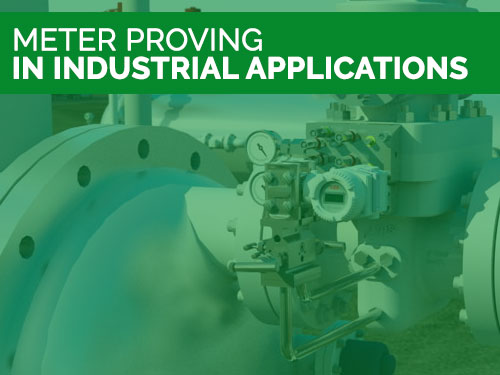
Meter proving is the function for determining a rectification element (i.e. a meter factor) to regulate the measured levels for inconsistencies as a consequence of installation and operating influences. Meter proving is carried out by comparing the service meter to a qualified prover (master meter, dynamic or tank prover) which could be traceable to a national meteorology institute such as for instance NIST.

Proving is widespread for liquid hydrocarbon metering and specifically for pipeline custody transfer. Oftentimes provers will align with meter station personnel to review outcome.

Despite the fact that meter testing has been in existence for upwards of a hundred years the exact standard prevails presently as it did numerous years ago. As a result this makes testing thru this method is vulnerable to many different adaptations and insecurities.

And then there are now the common gas meter proving expert who checks and verifies gas meters. Municipal and public works are without a doubt the most widespread employers of meter provers. The responsibility of a meter prover will be to basically move a certain amount of air through meter and checking that with the meter’s own register. Subsequently the prover examines the percent of air moved through the meter with the air calculated according to the meter itself.

meterproving2 - Meter Proving: There are Differences You Know!
Meter proving industrial applications in Alberta, Canada

Harvest Oilfield Services is a turnaround and shutdown services company located in Bonnyville, Lloydminster, Grande Prairie and Calgary.

We rely heavily upon the accuracy of our data in order to make decisions in the moment and on the fly in real-time, this is why when we need proving done we count on the credibility and reliability of what Intricate Group can provide.

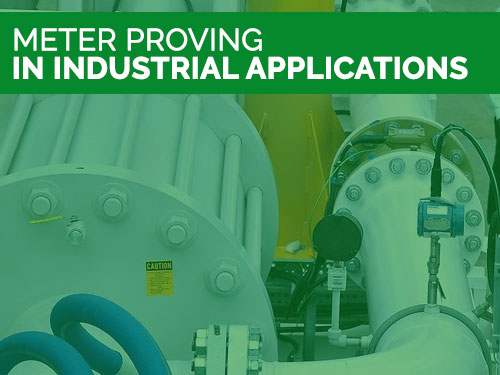
A bell prover has two layers, one inside tank encircled by yet another outside shell. There’s two layers and while the exterior layer is frequently loaded with oil, the inside layer is referred to as the bell. The liquid might there be to behave as the airtight seal for testing. Bell provers are oftentimes counterweighted to create positive pressure through a line and valve joined to a meter. Occasionally rollers or guides are introduced on the part that is moving of bell which makes for smooth linear mobility without the potential for unmeasurable pressure level differentials as a result of the bell swaying back or forth.

Some examples of the technical considerations where bell testing are the size of the bell, air pressure and Temp. Bell scales are unique to every bell and are regularly joined upright which has a needle-like indicator. Almost never is there a more technically apt task compared to a meter prover in the oil & gas industry.

While we outlined prior, each meter and gas type has its own system of testing. When evaluating a natural gas meter you have to first visually inspect many things preceding running any automation. There are lots of different methods of testing such as gas quality, ultimately meter testing never compares measurements to a primary reference device. There are times, orifice meters are sent off-site for substantiation to primary reference devices in lab-type facilities, but this testing is pricey and not often able to duplicate the field factors that impact meter accuracy.

As you can perhaps gather from this posting, meter testing/proving is a very complex process based on various factors.

4 Future Fossil Fuel Technologies Plan to Stop Pollution

4 Future Fossil Fuel Technologies Plan to Stop Pollution

Fossil-fuel-based power plants play an important role in global energy production and also some importance in carbon reduction as broadly renewable energy.

In recent years there have been many advances that have existed within the field of renewable and efficient energies, something that is simply indispensable in today’s world, where pollution rates are higher and the risk of damage is high.

And all these advances are made for a single common goal, which is to stop the degree of pollution emitted by carbon power plants or nuclear plants, things that are often very difficult to control and are harmful to the environment. Yet the efforts have not gone down in intensity and many scientists are looking for new ways to extract energy from the Earth ever cleaner.

Carbon Capture and Storage

Carbon Capture and Storage (CCS) is one of the few technologies capable of reducing CO2 emissions by 90%, a very high percentage compared to the other technologies that are currently being used to prevent the emission of more pollution.

It is for the same reason that various governments in all countries have tried to further develop this type of revolutionary technology that will completely change the world.

Integrated Gasification Combined Cycle

Integrated Gasification Combined Cycle is another type of technology leader in the efforts of various countries. The only downside is that it is very expensive and it would be difficult to invest in the widespread use of the whole system, despite the costs, the benefits to the environment are undeniable. IGCC plants convert coal into a synthesis gas, which is cleaned before being sent to a cycle system to generate electricity.

Continuous Emission Monitor

post4 3 - 4 Future Fossil Fuel Technologies Plan to Stop Pollution
It is then that we understand that the key to reducing the emission of pollution is the fixed state standards and the fulfillment of the industry in the field of energies. Continuous Emission Monitoring systems are vital for transmitting reliable emissions data to industry operators and inspectors.

This system works by extracting and diluting samples of combustion gases before being channeled to an analysis system.

Selective Catalytic Reduction

post4 4 - 4 Future Fossil Fuel Technologies Plan to Stop Pollution
Millions of fossil fuel power plants worldwide have invested in selective catalytic reduction (SCR) systems to reduce NOx emissions in a large number, which generally contribute to global warming and acid rain, as well how to stop plant growth and damage crops around the world. This involves the injection of ammonia or urea into the current of gases to convert NOx into nitrogen.

SCR systems require a high level of precision to easily convert NOx into nitrogen, and that degree of precision has a relatively low cost compared to other today’s technologies, so it’s a good choice for preventing Earth damage.

Many governments around the world have joined the development of this system to minimize costs and generate more clean energy using technology. Perhaps this is the next salvation of humanity in many years, or maybe not, it all depends on the scientists and industries.

For the same reasons we must raise awareness around the world, we need clean energies that do not harm our homes, we need to be stronger and less dependent on harmful energies with high carbon emissions. Finally, the Earth is our home, and we should not harm it.